

Higher Rates Keep Renters in Place and Slow New Apartment Construction
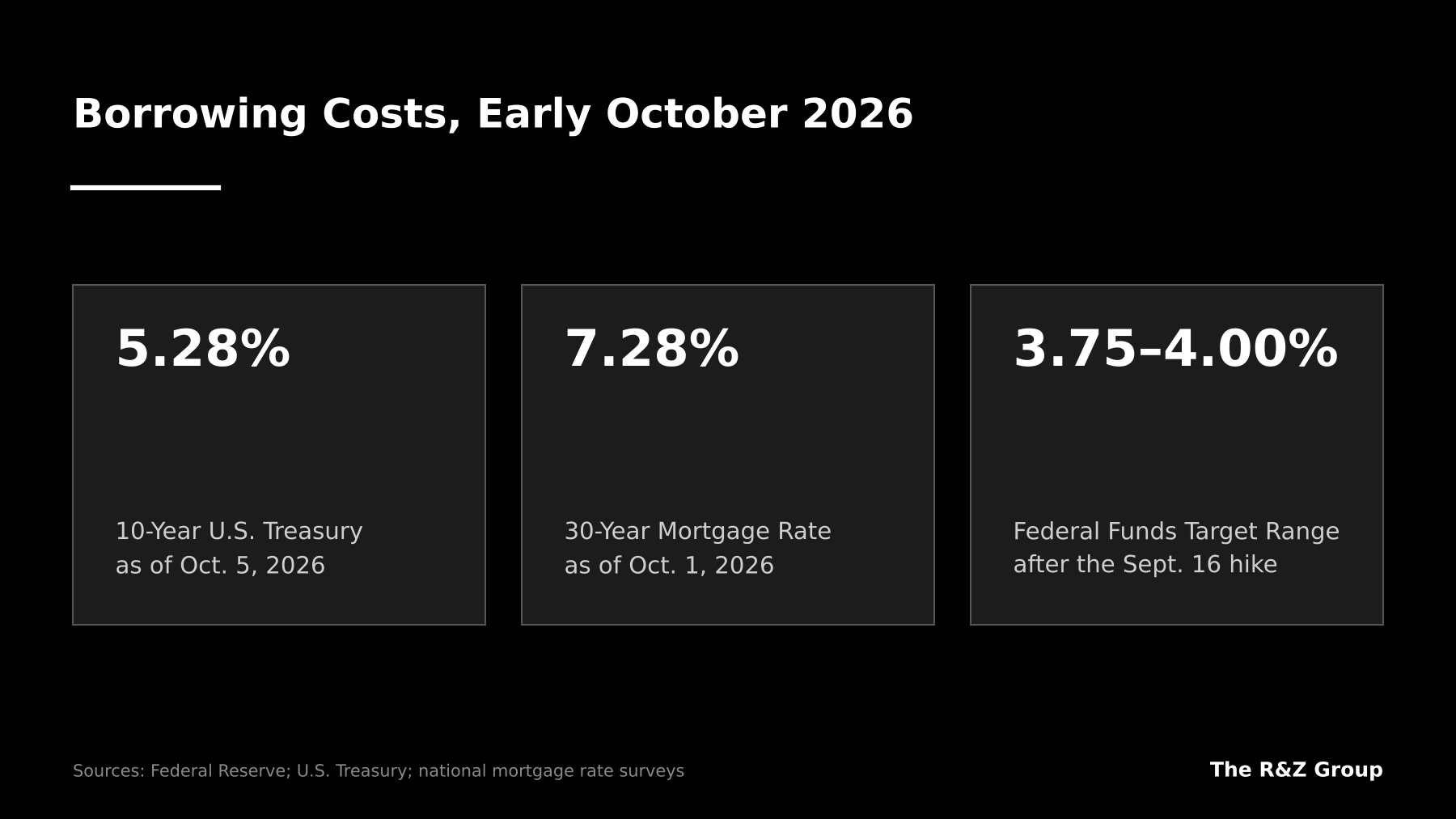
Higher interest rates are keeping renters in their apartments longer and slowing new construction, and both trends favor owners of existing multifamily buildings. The 30-year mortgage rate reached 7.28% on October 1, 2026, and 57.6% of renters nationwide renewed their leases in September, more than 5 percentage points above the 2015 to 2019 average. The same rates that support your occupancy also shrink refinance proceeds, so owners with loans coming due face a tougher financing picture.
Key takeaways
- Mortgage rates above 7% keep would-be buyers renting longer, and lease renewals sit well above their pre-pandemic average.
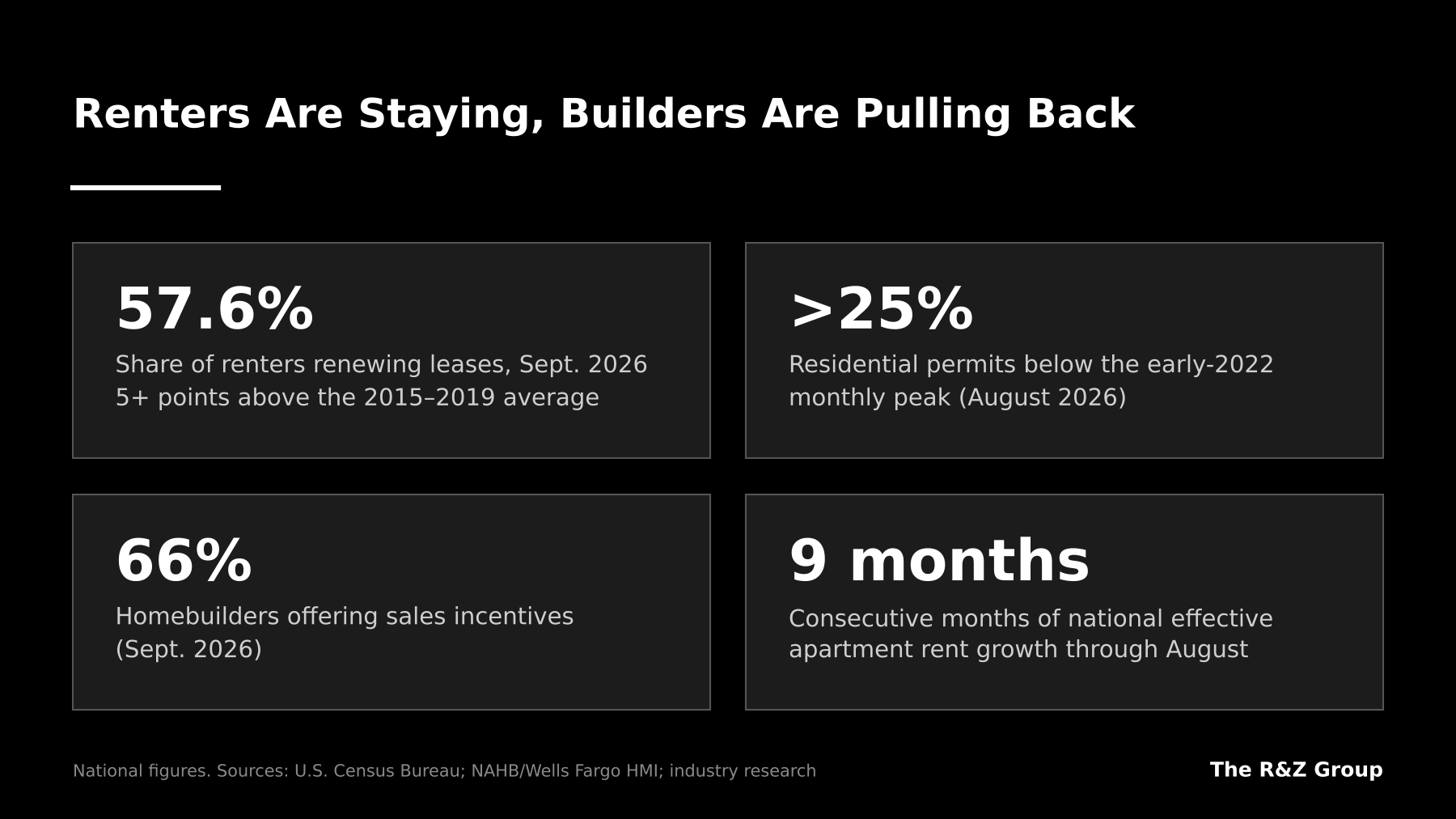
- National residential permits in August ran more than 25% below their early-2022 peak, and completions fell to their lowest level since late 2018.
- Fewer new units and fewer concessions point to steadier cash flow for existing apartment buildings.
- Loans maturing over the next year may push some owners to add equity or sell, which could bring more buildings to market.
Why are more renters renewing their leases?
Buying a home costs more than it did a year ago. The Federal Reserve raised its target rate to 3.75% to 4.00% on September 16, and the 10-year Treasury yield reached 5.28% on October 5. Mortgage lenders price off that yield, which pushed the average 30-year mortgage past 7% in mid-September.
Homeowners holding older loans at lower rates have little reason to sell and give up that rate. That keeps the supply of homes for sale thin. Renters who planned to buy stay put instead, and national renewal rates show it.
In the South Bay, Peninsula and Alameda County, home prices already sit far above the national median. Each jump in mortgage rates pushes ownership further out of reach for local renters, so the same pattern likely shows up here with more force.
Why is new apartment construction slowing?
Developers borrow to buy land and build, and higher rates raise the cost of every stage. Labor and material costs were already high before the September hike. National permits for new residential construction in August stayed more than 25% below their early-2022 monthly peak, and completions dropped to their lowest level since late 2018.
Homebuilders are trying to keep sales moving rather than stopping work. In September, 66% offered sales incentives such as mortgage rate buydowns and closing cost help, and 38% cut prices. Builder confidence still fell to a one-year low, according to the NAHB/Wells Fargo Housing Market Index.
What this means for apartment owners
If you own an existing building, you compete with fewer new units and with tenants who have fewer reasons to leave. National effective rents (asking rent minus concessions) grew for the ninth straight month in August, and property managers offered fewer concessions. Longer tenancies also cut your turnover costs: less vacancy, fewer make-ready repairs and less leasing time.
Two cautions apply. Tighter credit can slow hiring and household formation, which caps how far rents can climb. And in cities with local rent caps, such as San Jose, Mountain View, Oakland, Berkeley and Hayward, longer tenancies mean fewer chances to bring units to market rent at turnover.
How higher rates affect buying, selling and refinancing
Rising rates reduce how much a buyer can borrow on an acquisition and how much an owner can pull out in a refinance. That widens the gap between what sellers expect and what buyers can pay.
Multifamily debt maturing over the next year adds pressure. Owners refinancing loans originated at low rates may need to bring cash to closing or decide to sell. For buyers, that could mean more buildings coming to market. For sellers, stronger operations give buyers more confidence in a building's income, which helps close the pricing gap and supports more transactions.
What this means by region
South Bay
San Jose renters face some of the highest home prices in the country, which keeps more households renting. Owners of pre-1979 buildings under the city's Apartment Rent Ordinance benefit from lower turnover costs, but they have fewer chances to reset rents to market.
Peninsula
High home prices across San Mateo County and in Palo Alto and Mountain View keep the renter pool deep. With the 10-year Treasury above 5%, many Peninsula buildings now trade at cap rates (net operating income divided by price) below the cost of debt. Strong occupancy helps those buildings cover their debt payments.
Alameda County
Alameda County cities such as Oakland, Hayward and San Leandro tend to offer more affordable rents than the Peninsula, which draws renters priced out elsewhere. Owners with loans coming due should weigh steady occupancy against higher refinance costs before deciding to hold or sell.
Frequently asked questions
Do higher mortgage rates help apartment owners?
In most cases, yes, on the occupancy side. Higher mortgage rates delay home purchases, so renters stay longer and renewal rates rise. Owners see lower turnover costs, though higher rates also make refinancing and acquisitions more expensive.
Why are fewer apartments being built in 2026?
Higher interest rates raise the cost of land, development and construction loans, on top of already high labor and material costs. National residential permits in August 2026 ran more than 25% below their early-2022 peak. Fewer new units means less competition for existing buildings.
Is now a good time to sell a multifamily property in San Jose or Alameda County?
That depends on your loan terms, your tax basis and your plans. Strong occupancy and fewer concessions support a building's income, which helps pricing. If your loan matures in the next year, compare a sale against the cost of refinancing at today's rates.
What is the lock-in effect?
The lock-in effect describes homeowners who keep their current home because selling would mean giving up a low mortgage rate for a much higher one. It keeps the supply of homes for sale low. That pushes more households to keep renting.
Will rent growth continue in 2026?
National effective rents grew for nine straight months through August 2026, and concessions declined. Tighter financial conditions could slow hiring and household formation, which would limit further gains. Local rent ordinances also cap annual increases for many older buildings.
What to watch next
Watch the 10-year Treasury, the next round of inflation data and the Fed's remaining 2026 meetings. If you own a building with a loan maturing in the next 12 to 24 months, now is the time to review your options. [Internal link: Request a valuation]
This post is for general information and doesn't constitute legal, tax or financial advice. Talk to your attorney, CPA or lender about how this applies to your property.


